
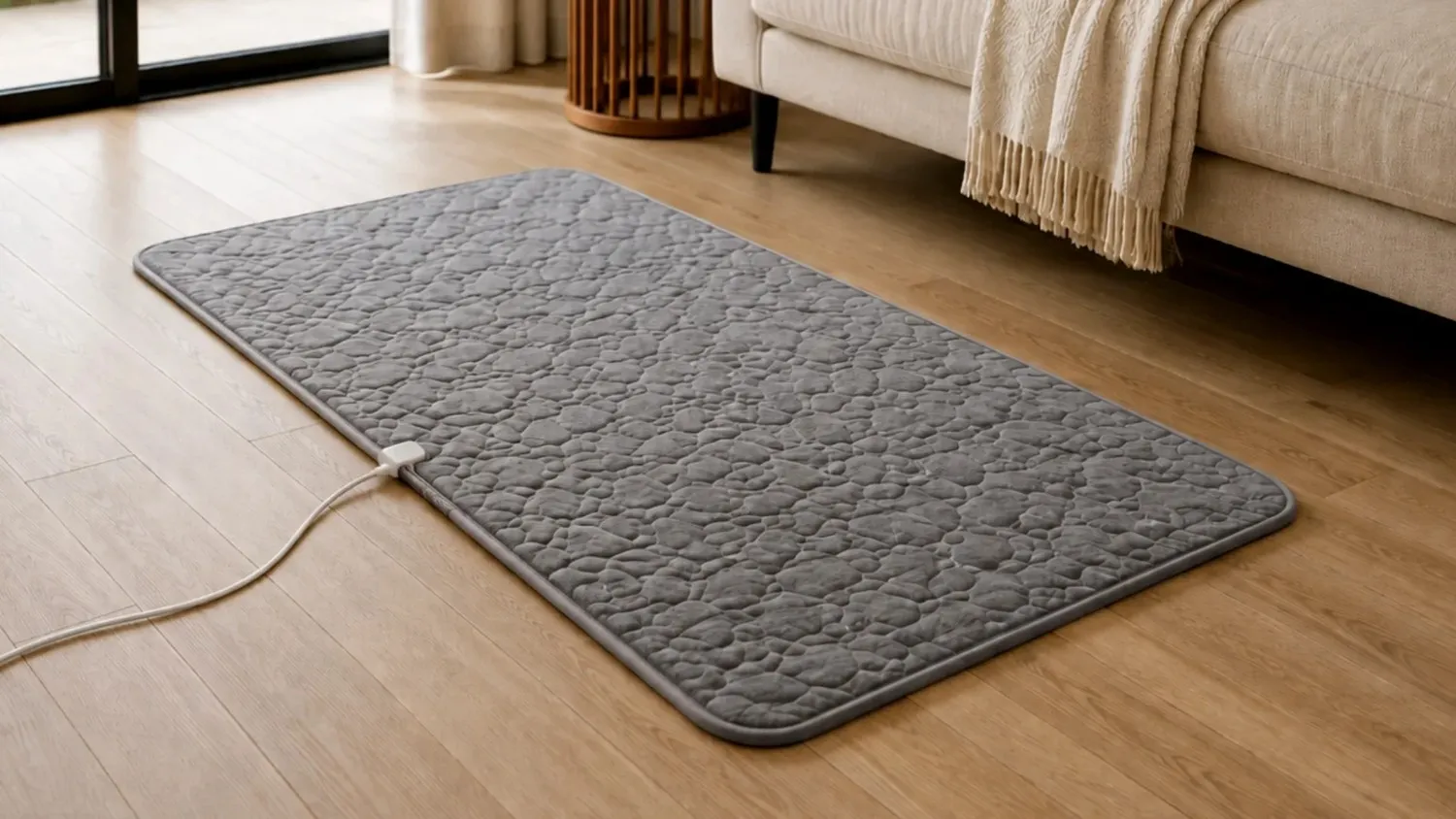
- Characteristics of the Heating Mats
- Heating Mat Uses
- A Closer Look: Radiant Comfort and Heat.
- Types of Heating Mats, Installation and More
- Installation Process
- About Ketswarm
- How to Select the Appropriate Thermostat to Use With Your Heating Mat
- Heating Mats vs. Heating Cables: What's the Difference?
- Heating Mats
- Heating Cables
- Installation Time and Skill
- Cost
- Which of These Should You Select?
Even the warmest room can be uninviting because of the cold floors. That is where heating mats enter, layers of heating elements, which are very thin and flexible, and which are laid under your flooring and which silently change the way a room feels. And in their absence you have to rely on radiators or air heating systems that keep the air warm but the floors cool underfoot, causing uneven comfort and increasing energy bills as rooms cannot feel really warm. Heating mats are the answer to this as they provide direct, reliable heating exactly where you need it, right under your feet.
Characteristics of the Heating Mats
The heating mats are available with a range of features which allow making them a convenient and popular heating choice:
- Slim, low profile design - thin enough to fit without increasing floor height much.
- Even heat production - uniformly warm throughout the mat surface.
- Flexible sizing - can be sized to fit room dimensions in different widths and lengths.
- Fast installation-easier and quicker to install than the traditional pipe-based systems.
- Fits with various flooring types - can be used under tile and stone, as well as some laminate or vinyl floors.
- Programmable controls - most mats are controlled by a thermostat to schedule and set the temperature.
Did you know?
The energy consumption of heating mats is usually a small portion of the amount of energy used by a hairdryer in an equal period, so they are a surprisingly energy-efficient method of heating targeted areas.
Heating Mat Uses
The heating mats can also be applied in a variety of areas:
- Bathrooms - one of the most frequent applications particularly when using tile flooring.
- Kitchens - added comfort in areas where individuals are on their feet longer.
- Entrances and mudrooms - assists in fighting the cold outside.
- Home offices - have small work areas that do not need heating of the entire house.
- Conservatories and sunrooms - adds natural warmth to floors with uniform floor heat.
A Closer Look: Radiant Comfort and Heat.
The concept of radiant heat is one thing another that should be learned about heating mats, as it is the principle on which they operate. In contrast to the convection heating method, which heats air and depends on the flow of said air in a room, radiant heating heats objects and people in its path (including the human body) directly. It is the reason why a room warmed by a heating mat can often be perceived as warmer with a lower thermostat setting than a room warmed by a radiator, as the warmness of radiant warmth is perceived at once and more evenly, with no cold drafts or temperature changes near the floor.
Trivia:
Radiant heating can be regarded as one of the oldest ways of heating that is still present today, the earliest rudimentary attempts were in the form of heated rock floors in different regions of the globe thousands of years ago.
Types of Heating Mats, Installation and More
It is just that simple and that is the difference heating mats provide, taking a warm step on a winter morning rather than a cold one. Laid under your floor, these thin layers of heating do their mute work in the background, making an ordinary floor a constant supply of warmth. They are vital to the majority of homes as they use air-based heat, which never quite gets to the floor, so that cold underfoot remains no matter how warm the rest of the room is.
There are two types of Heating Mats
- 1. Loose Cable Mats These are made of a heating cable which the installers will lay out on the floor in a serpentine form. They provide flexibility to oddly shaped rooms as the spacing of the cables can be done on site.
- 2. Pre-Spaced Mat Systems In this case, the heating cable is already attached on a mesh support at specified intervals. It is also quicker and more uniform to install, and fits perfectly to the standard shapes and sizes of rooms, such as a bathroom or kitchen.
- 3. Film-Based Mats Thin, film-based mats can be used beneath floating floors such as laminate or engineered wood. They also spread the heat via a broad, flat conducting surface, instead of single cables.
Installation Process
Installing the mat correctly involves three essential stages that ensure long-term performance and safety:
- Surface Preparation — the subfloor is swept and made level to have a uniform contact of the mat.
- Mat Placement - the mat is unfolded and placed as per the layout of the room, without touching fixtures such as toilets or cabinets.
- Testing - the system is checked to see that it is continuous and working correctly prior to covering.
- Covering - depending on the type of flooring, either the mat is covered with a thin-set mortar, self-leveling compound or embedded under the completed floor.
- Thermostat Connection — the mat is wired to a thermostat, usually installed on a nearby wall, to control temperature and scheduling
Did you know?
The majority of heating mat installations can be finished within a day, and they are one of the quickest heating upgrades that could be implemented on a single room.
About Ketswarm
Ketswarm is a reputable supplier of wires, cables and heat tracing products and focuses on heating wires, Teflon wires, PTFE wires and heating mats. We cater to residential, commercial, and industrial customers - homes, hotels, and offices, to specialized industrial uses - with products that are designed to perform, to be safe and to last. With a team of highly seasoned professionals, we provide customized, trusted solutions and support our customers with excellent technical capability and customized service.
How to Select the Appropriate Thermostat to Use With Your Heating Mat
The thermostat is frequently viewed as a peripheral part of the whole system, yet it actually serves as the hub of the whole system - and the appropriate one can result in a significant improvement of comfort and operating expenses.
The majority of heating mat thermostats are of the following three types:
- Manual thermostats - the simplest type, where you can set a fixed temperature, but no scheduling. Easy and cheap, but do not provide much in energy optimization.
- Programmable thermostats — allow you to program your thermostat to turn on and turn off at various times of the day, that is, when you are asleep or away the heating should be on at full blast, but when you are in the room, it should be at a cooler temperature.
- Smart thermostats- These are connected to Wi-Fi and can be controlled remotely and usually learn your habits and can automatically adjust to efficiency.
One important attribute to consider is the presence of a floor sensor, which determines the real temperature of the floor and not just the air in the vicinity. This enables the system to keep the desired warmth accurate and consistent, and avoids excessive heat build-up - particularly with materials used in floors, such as engineered wood, which is susceptible to overheating.
Placement matters too. Thermostats are typically mounted to a wall nearby, not in front of direct sunlight or drafts that may cause temperature readings to be inaccurate. On larger installations that span multiple rooms, other homeowners choose multi-zone thermostats, which enable each room to be independently adjusted, which can be handy in achieving a balance between comfort and energy consumption within a home.
Did you know?
Numerous intelligent thermostats will save energy by adjusting the temperature down when no one is in the room, which sensors or geofencing detect when not at home.
Finally, the thermostat is not a temperature dial, it is what transforms a heating mat into an effective, responsive and efficient heating source.
Heating Mats vs. Heating Cables: What's the Difference?
On the surface, heating mats and heating cables may appear like the same product in a different package - and in many aspects they share a common core technology. However, the difference in format creates actual variations in flexibility, time of installation and location of each of them.
Heating Mats
Heating Mats are ready-assembled, and the heating cable already attached to a mesh backing at the regular, factory-established intervals. This allows them to be quick and easy to set up, just place the mat on the floor. The loss is reduced flexibility: the mats work best in standard, rectangular areas such as a bathroom or kitchen, where the lines of the pre-established spacing coincide with the shape of the space.
Heating Cables
Loose heating cables are, on the contrary, not connected to any backing. The cable is installed by hand by installers spacing the cable in a manner that depends on the dimensions and layout of the room. This causes cables to be the preferred option when it comes to odd shaped rooms, rooms with obstructions such as islands or a built in furniture or even when a mat would not fit in the room neatly.
Installation Time and Skill
Since the mats are already spacing, they are usually easier to install and require less experienced installers. More care and planning is needed with cables, as improper space allocation can result in uneven heating - hotspots where the cable is too thin and cooler spots where it is spread too wide.
Cost
Mats are a little bit more expensive per square foot because they are pre-assembled, but the labor cost saved by being installed faster can cover this difference. Cables can also be cheaper, but can take a longer time to install particularly in complicated layouts.
Trivia:
There are also installers who adopt a hybrid system, mats on the main open space of a room, and loose cable fill-in odd edges or corners, which uses the advantages of both systems in a single installation.
Which of These Should You Select?
When your room is not an unusual or unusual shape, a mat is often the quicker and less expensive option. Loose cable can provide the flexibility to do the job right, whether you are working with an oddly shaped space or have to work around fixtures or have better control over exactly where the heat will go.
Conclusion
Heating pads provide a convenient, energy-saving alternative to larger heating systems by providing the ability to deliver warmth where it is most required, with none of the added size and complexity. Having several different styles that can fit any flooring type and room format, as well as a comparatively easy process of installation, they have become a commonplace solution to bathrooms, kitchens, and even small living rooms. Heating mats provide comfort, efficiency and long-term reliability whether you are renovating one room or preparing to renovate.
Looking for the Right Heating Mat Solution?
Get in touch with our team today and discover the perfect heating mat for your home, business, or project.
Frequently Asked Questions
Heating mats normally last 20-30 years with proper installation, and can be as long as the flooring that underlays them.
The majority of heating mats are effective in tile and stone. The mats made of film are more compatible with laminate or engineered wood, and thus it is vital to consider the type of mat in accordance with your flooring.
As heating mats are usually installed to heat specific areas of the house and not the entire home, they can have a relatively small effect on the electricity bill, particularly when combined with a programmable thermostat.
Some mats are meant to be installed by the user, but it is advisable that it is installed professionally especially when it comes to electrical connections and wiring of thermostats to prevent accidents and malfunctions.
In some cases, minor damage to some mat systems can be repaired, but more serious damage may involve replacing the damaged area, which may involve removing some of the floor.
Yes, heating mats are made to safety standards and when installed and used safely, are safe to use on a 24-hour-a-day basis