
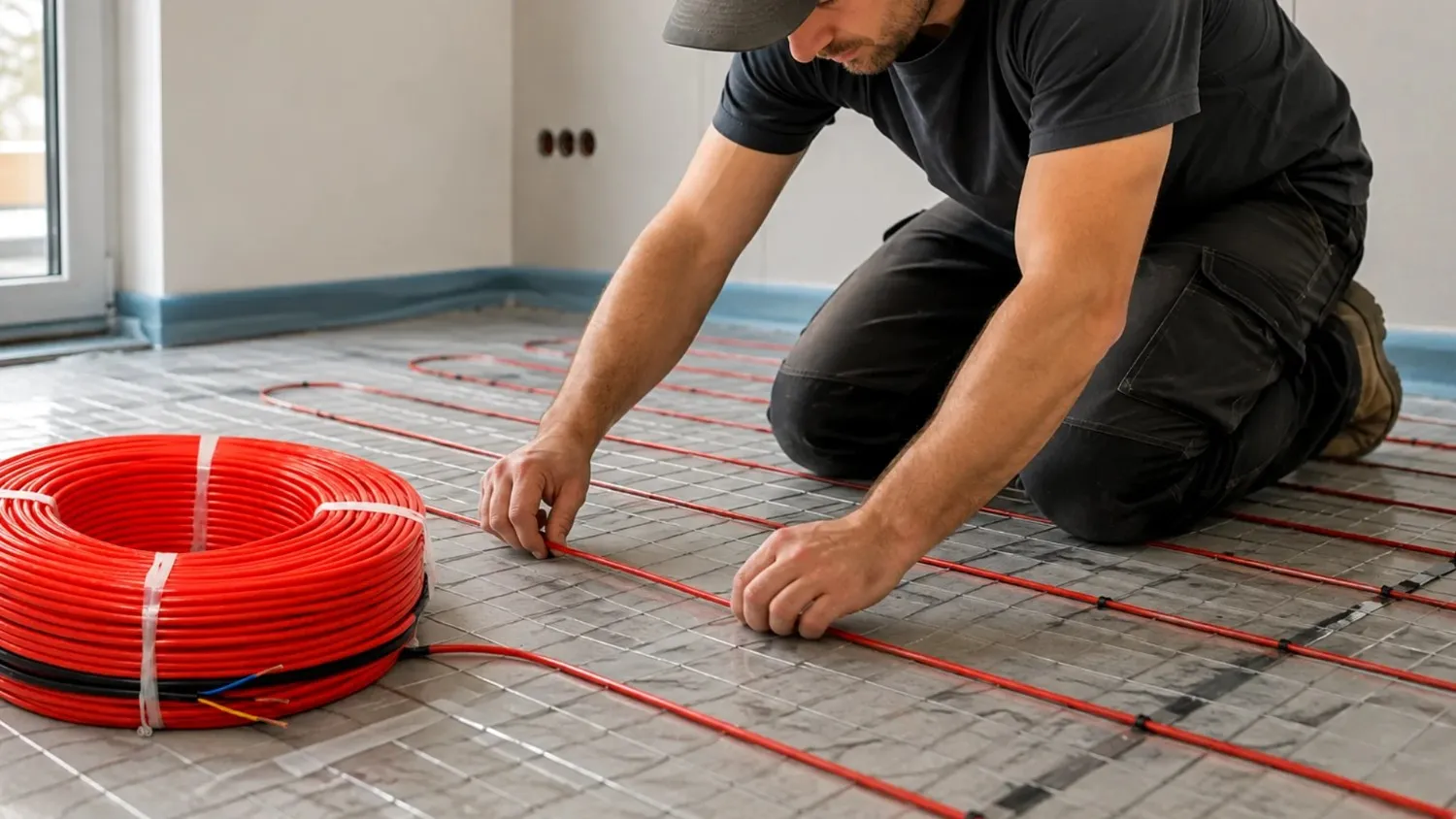
- What Is a Heating Cable?
- Characteristics of Heating Cable
- Uses of Heating Cable
- About Ketswarm
- Self-regulating vs. Permanently Watted Heating Cable
- Self-Regulating Cable
- Constant Wattage Cable
- Which One do You Choose?
- Freeze Protection Heating Cable: Pipe Freeze Protection
- System Process
- Where It is Popularly Installed
- Why It Matters
- Conclusion
Heating cable may not be an item you think about frequently, yet it is busy secretly at work in floors, pipes, roofs and industrial systems around the globe. Heating cable, whether it's to keep a floor in a bathroom warm or to keep pipes thawing during the winter, is one of those little known technologies that allow us to enjoy daily comfort and safety. This guide explains not only what heating cable is but also how it is used, why it is important.
What Is a Heating Cable?
Heating cable (also known as electric heating cable) is an electrical cable that is used to heat up when hot, such as through resistance heating - where resistance to electricity within the core of the cable causes it to become hot. It is set in a wide range of environments, under floor tiles, along roof edges and water pipes, to turn electricity into a constant, controllable source of heat in the very places where it is required.
Characteristics of Heating Cable
In residential comfort to industrial level performance, heating cable is provided courtesy of a couple of exceptional features:
- Flexible and versatile- can be installed in tailor-made designs to fit uneven areas or surfaces.
- Constant heat output - to provide the cable with a uniformly warm length.
- Sturdy construction - may be insulated and covered to resist moisture, pressure and extreme temperatures.
- Extended temperature range - can be used in low level comfort heating and high temperature industrial use.
- Works with thermostats and controllers - enables accurate temperature control and scheduling.
- Long service life - designed to work well over years with minimum maintenance.
Did you know?
The technology of heating cables dates back to the first half of the 20th century, when it was first used to trace piping in industry and later modified to residential comfort heating in the 1960s.
Uses of Heating Cable
The flexibility of heating cable can be found everywhere, but most of the population is unaware of it:
- Underfloor heatingUnderfloor radiators are installed to provide warmth to the floor under the tile, stone, or laminate.
- Pipe freeze protection - wrap around water pipes to keep them warm in low temperatures.
- De-icing of roof and gutters - fitted around the roof line and gutters to avoid ice dams.
- Heating in industrial processes - heating applied in manufacturing to keep pipelines and equipment at the right temperature.
- Greenhouse and heating farms - assists in controlling soil and air temperature in order to grow plants.
Other than the fundamentals, there are some details that keep reoccurring when individuals begin to consider heating cable more seriously:
- Self-regulating and constant wattage cables Self-regulating cables are cables that automatically change their heat production based on the temperature around them, whereas constant wattage cables consistently generate a certain amount of heat no matter the conditions.
- Voltage requirements - heating cables are in various voltage ratings and the appropriate one depends on the use and the local electrical regulations.
- A certification and safety standards - certified heating cables are tested and certified as safe to use especially in wet places or in hazardous environment.
- Lifespan expectations - majority of heating cables have a life expectancy of 20 or more years when properly installed and used.
- Energy use - Real power consumption varies with type of cable, length, and frequency of use of the system, but current cable designs are optimally designed to use less energy.
Trivia:
The concept of self-regulating heating cable was in fact a side-effect of the necessity to avoid overheating in industry environments: the self-adjustment of the cable minimizes fire hazards and energy waste at the same time.
About Ketswarm
Ketswarm is a reliable supplier of wires, cables and heat tracing systems that specializes in heating wires, Teflon wires, PTFE wires and heating mats. Our customers are residential, commercial, and industrial clients - homes, hotels, and offices, as well as specialty industrial customers - performance, safety, and durability are designed into the products we produce. We provide customized, trusted solutions, and support our customers with high technical skills and customized services, backed by a team of seasoned professionals.
Self-regulating vs. Permanently Watted Heating Cable
The question of which type of cable to use is a matter of the degree of control you require of the heat output - and the distinction between these two types of cables can spare you an inefficient or inappropriate system.
Self-Regulating Cable
Self-regulating cable comprises of special core that regulates its heat production in relation to the temperature around it. When the temperature falls the core of the cable generates even more heat; when the temperature rises the output will drop automatically - no thermostat cycling at the cable level is needed. This inherent responsiveness makes it a good choice in applications such as pipe freeze protection where conditions may vary during the day and seasonally. It also lowers the chances of overheating, as the cable automatically restricts itself, as temperatures go up.
Constant Wattage Cable
Constant wattage cable, however, is one that provides constant output of a steady amount of heat irrespective of the temperature around it. It does not self-adjust - the amount of heat being produced does not change with a slightly cool or very cold outside temperature. This suits it very well in applications where accurate, fixed heat is needed like some industrial processes or underfloor heating systems where predictable, constant heat is more valuable than efficiency based on variation.
Which One do You Choose?
- Self-regulating - best when the variable is required, freeze protection, when energy efficiency and safety is of the utmost importance.
- Constant wattage - more suitable in cases where a consistent and constant heat output is required, like in some industrial or specialty heating requirements.
Did you know?
Self-regulating cable can be cut to length on-site without compromising its performance, unlike constant wattage cable, which is commonly available at a fixed length and wattage rating.
Freeze Protection Heating Cable: Pipe Freeze Protection
Frozen pipes are a frequent and expensive issue in cold climates - a single burst pipe can cause a lot of water damage and result in costly repairs. Heating cable provides an easy, dependable solution that has been decades long in keeping water flowing safely during winter months.
System Process
- Cable placement - heating cable is either wrapped around the pipe in a spiral, or along the length of the pipe in a straight line depending on the size of the pipe and its configuration.
- Insulation - the covered pipe is usually insulated, which aids in retaining heat produced by the cable and enhances the energy efficiency in general.
- Activation of Thermostat or sensor - a thermostat or a built in sensor measures the temperature around the area and triggers the cable when the temperature is lower than freezing instead of being on all the time.
- Constant, low-temperature heat - once installed, the cable gives sufficient heat to keep the water inside the pipe above freezing to make sure it does not form ice which leads to blockages.
Where It is Popularly Installed
Pipe freeze protection cable is particularly popular in uncovered or vulnerable spaces, including those where pipes pass through unheated basements, crawl spaces, attics or exterior walls of a building - anywhere that pipes are more likely to be in a freezing state.
Why It Matters
In addition to eliminating the annoyance of frozen pipes, this system prevents the much more serious danger of bursting pipes where the frozen water in the pipe expands and breaks the pipe. Water damage that may occur can be far-reaching and expensive and freeze protection cable is a relatively low investment when compared to a possible big bill.
Trivia:
The most widely used kind of self-regulating cable is used to protect pipe freezes, and it is specifically due to its ability to regulate its output along its length, supplying more heat to colder parts of the pipe and less to warmer parts, without the use of several separate thermostats.
Conclusion
Heating cable can silently do its job behind the scenes, yet its effects are tremendous - warming floors, preventing winter damage to pipes and roofs. There are different varieties depending on the requirements, self-regulating comfort heating, and industrial-style constant wattage cable, just to name a few, making it a multi-purpose solution that is designed to provide comfort and protection against the elements in equal measure.
Ready to Get Started?
Contact us and find the appropriate heating cable to your space.
Frequently Asked Questions
The correctly certified and installed heating cable is designed and tested to be safely used in wet locations, such as underfloor bathroom installations.
Majority of heating cables are designed to last 20 years when installed and used normally.
Yes, heating cable is usually installed outside where it is used to de-ice roofs, protect gutters, and melt snow on driveways, but it must be rated to be used outside.
In general, no. Once installed, the heating cable systems require low maintenance, but it is advisable to test the thermostat and connections periodically.
Yes, in particular self-regulating cable, which automatically regulates its output with temperature, and does not waste energy like constant wattage systems.
Heating cable is a discrete cable that installers lay manually providing flexibility in custom layout, and heating mats are already spaced on a backing to allow quicker more standardized installation.